Lightning Network
3 Layer 2 Protocols You Should Know


The layer 2 market is constantly expanding, and scaling solutions like the Lightning Network exist for other blockchains as well. These 2CD layer protocols provide valuable performance and technical upgrades that enhance the mainnet without adding congestion. Here are 3 of the most popular layer 2 protocols that you should know.
Polygon
Best Layer 2 Protocol for Enterprise Dapps
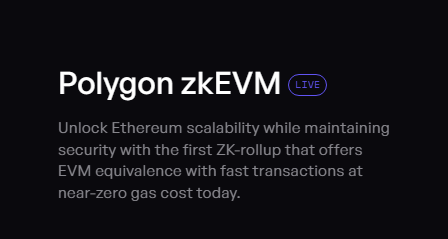
Polygon entered the market in 2017 as an Ethereum scaling solution known as MATIC before rebranding to Polygon. The platform was founded by Jaynti Kanani, Anurag Arjun, Sandeep Nailwal, and Mihailo Bjelic to offer a multi-chain 2CD layer scaling solution to the market.
Polygon was built from the ground up to help alleviate the record-level fees and congestion Ethereum users were suffering at the time. Using their experience gained from years of software engineering in the Mumbai area, the team set off to create an L2 that would provide all the features developers needed to create powerful ERC-20 compatible applications.
Source – Polygon
They envisioned the network as an internet of Ethereum blockchains, connecting the growing ecosystem. This strategy helped the project achieve immediate success across the developer community.
It offered a mix of high security, enterprise features, and low gas fees. Developers enjoyed the custom WASM execution environments and the network’s easy interoperability. Additionally, the one-click deployment strategy continues to drive users to the community.
Modular Design
The modular security features enabled corporations to leverage the security of Ethereum while offering higher performance and more advanced features than the mainnet.
Notably, the network’s low transaction fees and fast processing time of 65,000 transactions per second make it an ideal solution for major corporations and dapps.
Polygon utilizes zkrollup technology to ensure added privacy. It also features pluggable consensus, staking, and governance solutions. These options provide the platform with the flexibility and security needed to handle massive enterprise-level applications.
Vibrant Ecosystem
Today, Polygon has one of the most vibrant L2 ecosystems in the market. It hosts some of the best-known DeFi and NFT applications in operation today. These platforms include Aave, SushiSwap, Curve, OpenSea, Rarible, and more.
MATIC is the network’s native token. It serves several roles, including paying fees, voting rights, and enabling users to access the network’s key features and services. Today, MATIC remains a popular L2 token that continues to drive blockchain adoption across the corporate sector.
Mantle
Best Layer 2 Protocol for Institutional Finance
Mantle entered the blockchain economy in July 2023. The project’s founders, Pascal Leblanc and JacobC.eth, wanted to create a scaling solution that could tackle ERC dapp congestion while enhancing developer options.
Their solution was to create a modular L2 network that allows developers to swap and replace features easily. This setup also makes it more suitable to handle upgrades without any network disturbances, a key feature for financial applications.
Community Governance
Notably, Mantle was the first L2 to offer community governance in the form of a DAO. This setup gives the users complete control over the network’s future actions and evolution. As part of this strategy, users stake the MNT token to gain voting rights and the ability to put forth proposals.
Mantle offers hyperscale performance and low fees. The network supports off-chain transaction processing. Additionally, it provides top-notch security via a Multi-Party Computation (MPC) process that works with a Threshold Signature Scheme (TSS) to prevent unwanted transactions.
Liquidity Staking
Another unique feature of Mantle is its liquidity staking options. Liquidity staking is similar to traditional staking methods in that a user agrees to lock up their token into a smart contract for a time.
The main difference between liquidity staking and traditional staking is that the liquidity staker receives a token that represents their staked asset, enabling them to access the liquidity during the process.
The MNT token enables users to interact with the network. It can be liquidity staked to gain passive rewards and voting rights. The DAO is how the community can decide how to spend the treasury. All of these factors make Mantle a smart option for large financial applications.
Orderly Network
Best Layer 2 Protocol for Trading Dapps
Orderly Network first entered service in April 2022. Its founders, Ran Yi and Terence Ng, wanted to create an L2 scaling solution that leveraged the advanced NEAR blockchain. This solution differed from competitors in that its primary focus was to support the creation of trading applications such as DEXs and CEXs.
As part of this approach, the developers added a plethora of features to support these actions. For example, the platform features easy-to-integrate developer tools, including low-latency matching. Additionally, its design supports high-frequency trading across multiple EVM and non-EVM blockchains.
Plug-Ins
This permissionless scaling solution has been proven to be reliable and secure. It features development plugins designed specifically for its core task, supporting trading solutions.
As such, developers can access key features like spot trading, margin trading, perpetual futures, and a host of other cool options designed to meet the needs of brokers and custodians.
Shared Orderbook
Orderly Network provides secure access to the shared orderbook as part of its strategy. This orderbook brings together other L2 solutions, including Arbitrum, Optimism, Polygon, Base, Mantle, and Near, expanding liquidity and performance.
Orderly Network users enjoy gasless trading, making it ideal for use by daily traders and professionals. Additionally. The revenue-sharing model incentivizes developers.
ORDER is the main utility token for the Orderly Network. It can be found on several popular exchanges and provides developers with a way to access the network’s DEX-centric options. It also serves a vital role as a governance and trading pair token.
Layer 2 Protocols Changing the Game
It is easy to see why layer 2 protocols have become so popular. These networks open the door for more functionality and provide enhanced performance. You can expect to see even more layer 2 protocols gain momentum as the crypto market expands and scalability becomes even more relevant to users.
Learn about other cool L2 News here.